

Managing Editor
@ShahidNShah
@ShahidNShah
This article was initially posted at HISTalk. However, the issue is important and I’ve received good feedback on the readiness of medical devices from Tim Gee of Medical Connectivity and I wanted to share his thoughts here as well.
As we all probably know by now, this year Daylight Savings Time (DST) starts on March 11 instead of in April. Daylight-saving time has usually started on first Sunday of April and reverted to standard time on the last Sunday in October. However, due to the US Energy Policy Act of 2005, the daylight-saving schedule will be extended by a month, with the period beginning on the second Sunday in March and ending on the first Sunday in November. At first glance this is not a big deal, clocks will just move ahead by an hour three weeks earlier; however, given that most modern healthcare environments are networked and networked systems need to synchronize using price time servers we may be in for some headaches.
Some people compare this to “Y2K” upgrades but let’s not kid ourselves, it’s nowhere as big or as time-consuming as Y2K. That’s just FUD that consultants want to promote to get more work.
However, here are just some symptoms we will see if we’re not up to speed with the DST changes:
“Smart” medical devices which work on time-based controls (pumps, vital signs, etc)
Many medical devices create data that includes the date and time – diagnostic imaging modalities, 12-lead ECG carts, continuous patient monitors, just to name a few. About any device that prints a strip chart, creates an image or report will include the date and time that the data was generated. Data from devices must have the proper date and time so that patient data can be represented accurately. Data tagged with the wrong date and time could result in critical data being missed or misinterpreted, resulting in an adverse patient event.
What do you do today?
Contact the vendors of all your patient-related software (OR scheduling, patient scheduling, lab management, etc) to see if they’re ready. Most should be ready – especially if they get their times and DST rules from the operating system.
The more sophisticated systems already sync to a time server on the hospital’s network. The challenge for hospitals will be to identify the devices that are not automatically time synched, and ensure that they are updated (and configured) to support the daylight savings changes or manually reset when daylight savings occurs. Biomedical engineering may already have a list of effected or vulnerable devices, and in any event they are the best source for identifying and tracking vulnerable systems will be your biomeds.
If you’ve already called device vendors, software vendors, consultants, etc please share your thoughts as comments here (or send me an email and I will summarize it into another blog posting).
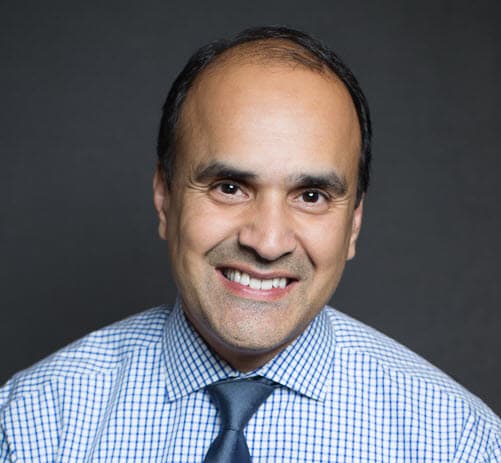
Shahid Shah is an internationally recognized enterprise software guru that specializes in digital health with an emphasis on e-health, EHR/EMR, big data, iOT, data interoperability, med device connectivity, and bioinformatics.
Connecting innovation decision makers to authoritative information, institutions, people and insights.

Medigy accurately delivers healthcare and technology information, news and insight from around the world.
Medigy surfaces the world's best crowdsourced health tech offerings with social interactions and peer reviews.
© 2025 Netspective Media LLC. All Rights Reserved.
Built on Mar 12, 2025 at 5:07am